Introduction
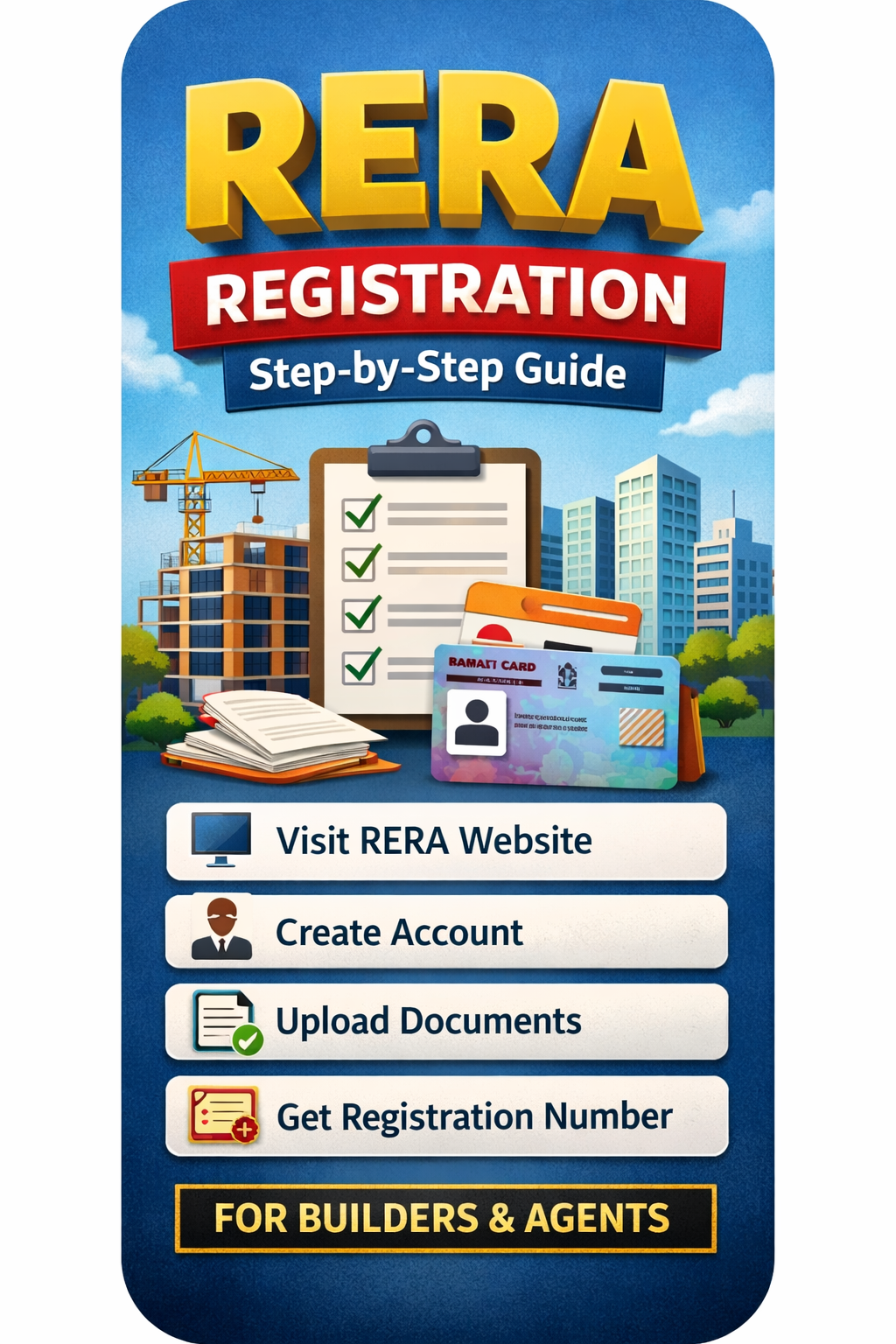
The Real Estate (Regulation and Development) Act, 2016 (RERA) was introduced to improve transparency, accountability, and efficiency in India’s real estate sector. RERA protects the interests of homebuyers while ensuring that developers and real estate agents comply with legal standards. If you’re a builder, promoter, or real estate agent, obtaining RERA registration is essential before advertising, marketing, or selling eligible real estate projects.
This guide explains the step-by-step RERA registration process, required documents, eligibility, and key benefits.
Who Needs RERA Registration?
RERA registration is mandatory for:
- Real estate developers and builders
- Promoters launching residential or commercial projects
- Real estate agents and property brokers
- Projects exceeding 500 square meters of land area or having more than 8 apartments (subject to applicable state RERA rules)
Registering under RERA helps ensure legal compliance and enhances buyer confidence.
Step-by-Step Process to Register for RERA
Step 1: Visit the Official State RERA Portal
Each Indian state has its own RERA authority and online registration portal. Visit the official website of your respective state’s RERA authority (such as UP RERA, Maharashtra RERA, Gujarat RERA, etc.) to begin the registration process.
Step 2: Create Your User Account
Select the registration option and create a new account by providing:
- Full Name
- Email Address
- Mobile Number
- User ID and Password
Verify your mobile number and email address using the OTP sent by the portal.
Step 3: Complete the Registration Form
After logging in, fill out the online application with accurate information, including:
- Applicant or company details
- Business address
- PAN and Aadhaar information
- Project information (for developers)
- Organization details and contact information
Ensure that all details match your official documents.
Step 4: Upload Required Documents
Upload clear scanned copies of all mandatory documents in the prescribed format.
Commonly required documents include:
- PAN Card
- Aadhaar Card
- Company or firm registration certificate
- Project plans and layout approvals
- Land ownership documents
- Financial statements
- Address proof
Providing complete and accurate documentation helps avoid application delays.
Step 5: Pay the Registration Fee
The applicable registration fee depends on the state regulations, project type, and project size.
Most RERA portals support online payments through:
- UPI
- Net Banking
- Debit Card
- Credit Card
Keep the payment receipt for future reference.
🔹 Step 6: Submit Your Application
Before final submission:
- Review all entered information carefully.
- Verify uploaded documents.
- Correct any errors or missing information.
Once verified, submit the application online.
Step 7: Verification by the RERA Authority
The RERA authority will examine your application and supporting documents.
If additional clarification or documents are required, you’ll receive a notification through the portal or registered email.
Respond promptly to avoid processing delays.
🔹 Step 8: Receive Your RERA Registration Number
After successful verification and approval, the authority will issue your RERA Registration Number and registration certificate.
Developers and agents must display this registration number on:
- Property advertisements
- Brochures
- Websites
- Marketing materials
- Property listings
This helps buyers verify the authenticity of the project or agent.
Documents Required for RERA Registration
For Developers
- PAN Card
- Aadhaar Card
- Company or Firm Registration Certificate
- Project Layout Plan
- Approved Building Plan
- Land Ownership Documents
- Title Deed
- Financial Statements
- Bank Account Details
- Project Approvals and NOCs (if applicable)
For Real Estate Agents
- PAN Card
- Aadhaar Card
- Address Proof
- Business Registration Certificate (if applicable)
- Passport-size Photograph
- GST Registration (if applicable)
- Contact Details
Important Points to Remember
- RERA registration must be completed before advertising or selling eligible projects.
- Providing false or misleading information may result in penalties.
- Developers must regularly update project progress and construction status on the RERA portal.
- Real estate agents must maintain a valid registration certificate while conducting business.
- Ensure compliance with all state-specific RERA regulations.
Benefits of RERA Registration
- Builds trust and confidence among buyers.
- Enhances transparency in property transactions.
- Improves the credibility of developers and real estate agents.
- Provides legal protection for both buyers and sellers.
- Promotes timely project completion and accountability.
- Reduces the chances of fraud and disputes.
- Increases the market value and reliability of registered projects.
Conclusion
RERA registration is an essential legal requirement for eligible real estate developers, promoters, and agents in India. It promotes transparency, protects homebuyers, and strengthens confidence in the real estate market. By following the correct registration process, submitting complete documentation, and complying with RERA guidelines, you can legally market your projects and build a trustworthy reputation in the industry. Whether you’re launching a new project or working as a real estate agent, obtaining RERA registration is a crucial step toward long-term success in the real estate sector.